An underestimated value driver: How your property's car park becomes a profit centre

Why is the car park often the blind spot of a property?
Asset and property managers invest in smart energy systems and digital tenant portals. The car park in front of the door, on the other hand, usually remains analogue and maintenance-intensive. Rattling barriers, lost paper tickets, manually maintained lists of permit holders and recurring complaints about illegal parkers tie up resources.
Yet the industry has long been undergoing change. According to a digitalisation study by EY Real Estate and the Zentraler Immobilien Ausschuss (German Property Federation) from 2021, more than 90 percent of decision-makers agree: Without end-to-end digitalisation, there is no future viability. This also applies to parking management, which has a direct impact on costs and revenue.
Many car parks are not actively managed at all because of the effort involved. This is precisely why revenue potential remains untapped. Without enforcement, unauthorised parkers block spaces, tenants and staff search for gaps, and in the worst case customers drive to the competition.
How does the car park turn from a cost centre into a profit centre?
The solution is a digital, barrier-free infrastructure. It is suitable for commercial properties, retail properties, shopping centres, residential and office buildings as well as mixed-use sites. Cameras record licence plates on entry and exit. The licence plate becomes the ticket. Software monitors all parking sessions digitally.
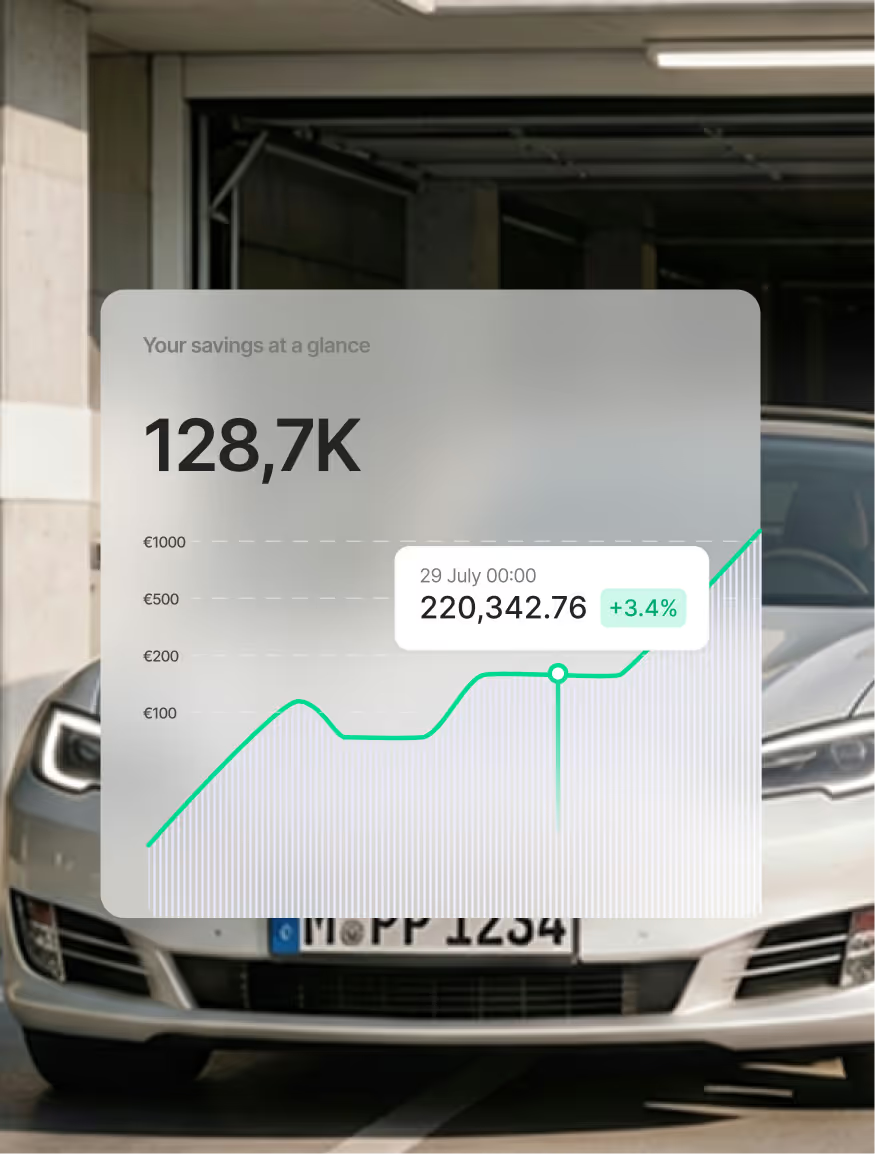
The economic lever lies in NOI (net operating income). Anyone who reduces operating costs (OPEX) and increases revenue at the same time raises the overall value of the property. A digital parking system works on both sides.
- No barriers, no tickets: maintenance, repairs, ticket printers and paper are eliminated. Effect on NOI: lower OPEX.
- Automatic enforcement: fewer non-payers and illegal parkers, no enforcement staff. Effect on NOI: higher revenue, lower OPEX.
- Dynamic rates: prices based on time of day or occupancy. Effect on NOI: more revenue per parking space.
- Renting out idle times: to residents at night or at the weekend. Effect on NOI: additional revenue.
- Self-management by users: tenants and permit holders maintain their permits themselves. Effect on NOI: less administrative effort.
- Usage data: occupancy, parking duration, peak times. Effect on NOI: better decisions on space and rates.
How does a digital parking system reduce operating costs?
Mechanical barrier systems require expensive, recurring maintenance. Ticket printers jam, paper tickets create waste, and breakdowns cause backlogs and lost revenue. A digital parking system needs neither barriers nor tickets. This also eliminates the running costs they cause.
Commercial practice shows how big the lever is. On average, annual service charges for commercial space exceed 90,000 euros. According to a recent analysis, 84 percent of these statements contain errors (Mineko, 2026). Digital car parks create transparency over an important item on this bill.
At the same time, enforcement runs automatically. The system measures the parking duration and checks on exit whether payment has been made or a permit exists. Billing is fully automatic. Your team can focus on the core business again.
{{cta}}
How do you increase revenue and occupancy?
Continuous enforcement around the clock significantly reduces the number of non-payers. Flexible payment options further increase the payment rate. Payment is made by app, online, at the pay station by card or NFC and, if desired, still in cash. Smart pay stations with debit and credit card payment can be connected, as can app parking.
Because every parking session is recorded digitally, anonymised usage data is generated. You can see occupancy, average parking duration and peak times. On this basis, you design rates dynamically: When demand is high, revenue per parking space rises; when occupancy is low, lower prices attract more drivers. You also manage offers such as »first hour free« for customers or dedicated rates for permit holders digitally.
A barrier-free system also prevents backlogs at peak times and increases throughput. More vehicles per hour mean more visitors and more revenue for your tenants.
How do you manage permit holders and tenants without bureaucracy?
The more varied the use of a property, the more complex the management of long-term parking spaces becomes. Traditionally, property managers issue keys, chips or parking cards and collect them again. This happens every time someone moves in or out and every time staff change. Lists have to be maintained, and it remains uncertain whether everyone only parks as many vehicles as they are entitled to.
With Peter Park, you assign parking permits in a web portal with just a few clicks. You can also give neighbouring businesses access so that they can activate long-term parkers and permit holders directly on site. Physical cards and keys are no longer needed.
The online shop for permit holders
Via an online shop, drivers purchase their permits themselves. Options include time periods, such as one month, or quotas, such as 50 parking stays. Peter Park opens the shop to the general public or only to a specific group of people.
This way, you ensure that in a mixed-use property only residential tenants and employees of businesses located there buy tickets. You offer different rates to different groups. Tenants whose parking space is already included in their rent simply register their licence plate. Other drivers buy their ticket in the same shop.
The benefits at a glance:
- Automated ticket assignment: You manage even complex rate structures for different groups with just a few clicks.
- Data protection-compliant processes: User data is processed securely and lawfully in accordance with the GDPR.
- Efficiency: You only send the link to the shop. The licence plate becomes the long-term parking ticket, and parking cards no longer have to be handed over in person.
What role does the car park play in current real estate trends?
Several developments are making digital parking management more important for the real estate industry:
- Mixed-use properties: Residential, office, retail, medical practices, fitness and cinema under one roof avoid vacancies and make properties more resilient. However, they require different parking conditions for each user group. Digitally, this effort is reduced to a minimum, and customer enquiries decrease.
- Neighbourhood development: Liveable neighbourhoods consider buildings, car parks, squares and green spaces together. This increases the need for Mobility Hubs that connect neighbourhoods with each other and with city centres.
- Sustainability: Charging points for e-mobility and solar installations on car parks are becoming more common. For certain buildings, the GEIG (German Building Electromobility Infrastructure Act) requires charging infrastructure, and depending on the federal state, solar obligations apply to car parks. Without barriers and tickets, paper consumption, wear parts, congestion and traffic searching for parking are reduced.
How much effort is the introduction in existing properties?
Compared to barrier technology, purchase and operation are inexpensive. The intervention in the existing infrastructure is minimal, whether in a new build or an existing property. Peter Park takes care of project planning and on-site installation, onboarding and support. You can read how to introduce parking management simply, quickly and cost-effectively in our guide.
Practical examples: How the model works in typical properties
Shopping centre with empty night hours
Shopping centres are often empty at night. These parking spaces can be rented out to residents during the idle times. The effort remains low because users manage their parking permits themselves. During the day, automatic enforcement ensures free spaces for customers.
Office building at the weekend
Owners offer parking spaces that employees do not need at night and at the weekend to residents via the online shop. Empty underground car park spaces can also be marketed in this way. Occupancy rises, and with it revenue.
Retail with limited free parking time
Supermarkets and DIY stores provide their customers with parking spaces free of charge for a limited time. If unauthorised parkers occupy these spaces, revenue falls. The system determines the maximum parking duration automatically and initiates follow-up if it is exceeded. Your staff no longer have to carry out checks, and free spaces support visitor footfall.
{{contact}}
Conclusion
In the digitalisation of properties, car parks are often seen as a side issue, yet they have a direct impact on key figures. Barrier-free, digital parking management reduces operating costs, lowers administrative effort and opens up additional revenue. Each of these improvements raises the operating result and thus the value of your property. At the same time, tenants, staff and customers park stress-free and are happy to come back.

Melanie Geipel
This is the Bio Summary
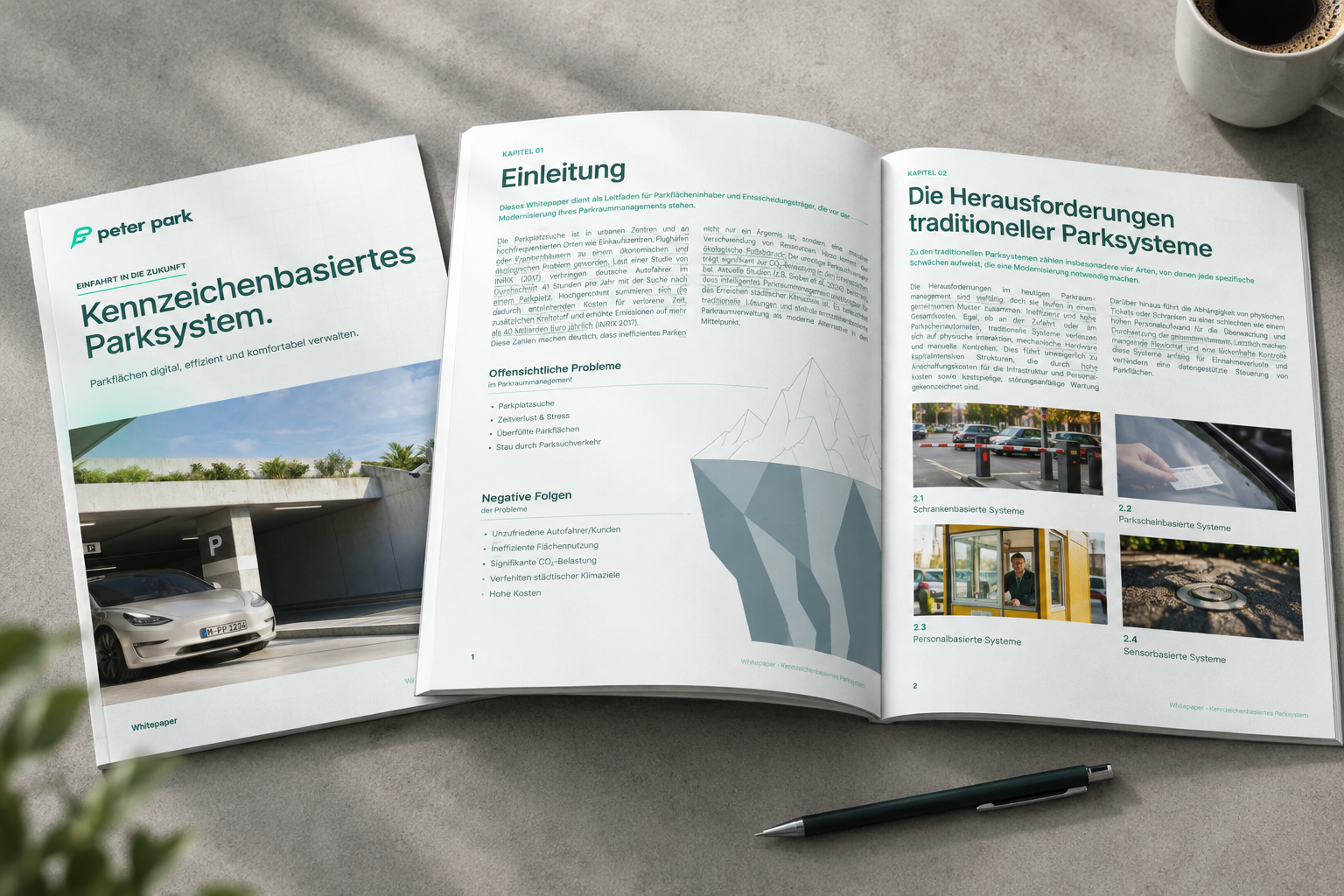
Wie kennzeichenbasierte Parksysteme funktionieren und was Betreiber bei der Umstellung beachten sollten.
Whitepaper herunterladen