Manage parking spaces digitally around the clock without personnel costs

Manual and digital parking management compared
Managing car parks with staff is particularly common in local recreation areas and at leisure facilities. Many of these facilities are only busy under certain conditions: bathing lakes in summer when the weather is good, and theatres during performances.
Staff costs need to pay off, so in many cases it makes sense to staff car parks only when enough visitors are expected. When the entrance is not staffed, visitors park for free.
Pay machines are also widespread: visitors buy a ticket and display it clearly in their vehicle. Staff then check sporadically whether everyone has paid. Visitors know that checks are not continuous, and some skip buying a ticket and park for free.
In both cases, car park operators lose revenue, either because ticket sales at the entrance are not staffed all the time, or because drivers skip buying a ticket on car parks that are only checked occasionally.
On such car parks, a digital parking management solution that records every parking session around the clock can be an alternative. Especially given the shortage of skilled workers, which also worries the tourism industry, replacing staff-intensive management with a digital system can pay off.
What does manual parking management mean?
Staff-based parking management on off-street car parks refers to the management and control of multi-storey car parks, garages and private car parks by staff on site. This method has advantages and disadvantages.
Advantages of staff-based parking management
On the plus side, staff on site can answer drivers' questions directly and help when something is unclear, which increases customer satisfaction.
The presence of staff can also increase safety, or at least drivers' sense of safety. The technical effort is also relatively low, especially compared with expensive automated barrier systems. Car parks where staff collect the fee at the entrance do not need a power supply. This type of parking management is therefore also suitable for very remote car parks.
{{contact}}
Challenges of staff-based parking management
However, managing car parks with staff also brings some difficulties. Staff are expensive, especially when car parks operate around the clock or at times when surcharges apply, such as at night, on Sundays and on public holidays. Wages, social security contributions and other personnel costs then make up a considerable part of operating costs. On top of that, the shortage of skilled workers may mean there are not enough staff to cover every shift.
Efficiency is also lower than with automated systems, because staff process fewer vehicles in the same time than digital solutions with licence plate scanners. At popular destinations or venues such as theatres and opera houses, queues can build up at peak times and hold up traffic in the surrounding area when every driver pays cash at the entrance.
When car parks are patrolled by staff and tickets are sold at the entrance, operators also receive less data on how the car park is used. This means fewer analyses and insights on which parking providers could base improvements.
In addition, the quality of parking management depends heavily on the motivation and reliability of staff. Wrong decisions or human error are possible, which can harm customer satisfaction and revenue. And this type of parking management has downsides for the staff themselves too: they have to work outdoors without shelter in all weathers, in ice and snow at mountain railways in winter, in storms at theatres and in the heat at lidos. They are also exposed to drivers' moods while doing a monotonous and sometimes boring job instead of more interesting tasks.
For drivers, staff-based management means they have to decide on a parking duration as soon as they arrive. In some cases only day tickets are available, so visitors pay the day rate even if they only want to stay a short time.
What are the alternatives to staff-intensive parking management?
Alternatives to staff-based parking management are barrier-based and barrier-free digital systems. Both need a reliable power supply. Barrier solutions are expensive to buy and run because of their mechanical components, which wear out and need a lot of maintenance. An on-call service may also be needed to open the barriers manually if they break down.
Digital, barrier-free systems such as the Peter Park system, on the other hand, save resources and costs: the smart Internet of Things solution needs very little hardware on the car park and has low purchase and maintenance costs. Doing without barriers in particular reduces the number of parts that wear out. Instead, the Peter Park system uses licence plate recognition to record vehicles entering and leaving, and calculates the exact parking time from this. Licence plates are read in line with the European General Data Protection Regulation (GDPR). Before leaving the car park, drivers pay the parking fee by entering their licence plate in partner apps or at pay machines on site, or online up to 24 hours after leaving. Paper tickets are no longer needed, which saves costs and avoids waste. Because the entrance and exit have no barriers and nobody collects fees there, vehicles no longer have to brake, stop and pull away again, so there are no queues. This helps reduce CO2 emissions on site.
The system addresses the current challenges of private and public car park operators. For example, Peter Park relieves its partners with a comprehensive one-stop service, including following up on parking violations: in the event of a violation, the vehicle keeper's details can be requested from the Federal Motor Transport Authority (KBA).
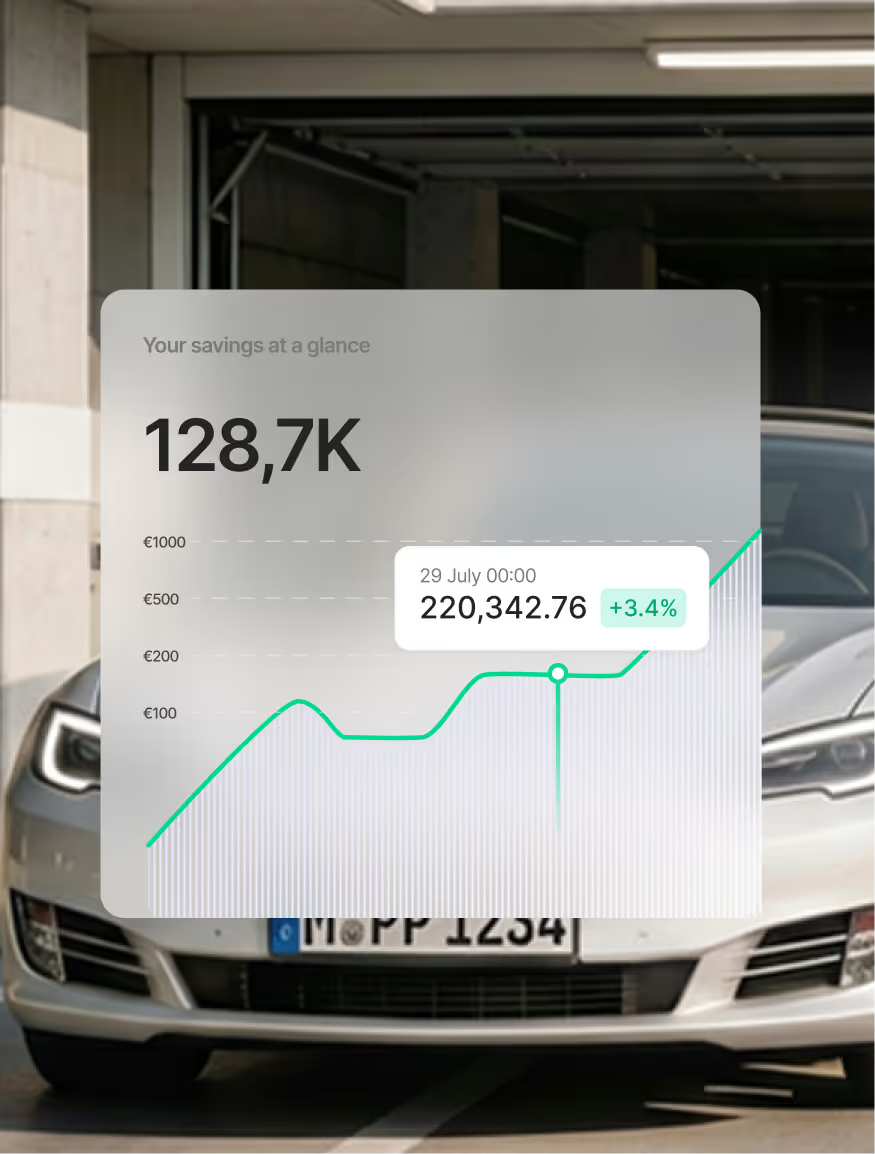
Thanks to the digital system, car park operators receive real-time data on how their sites are used without having to install additional sensors. They can view and analyse the information in a user-friendly dashboard. Current occupancy data can also be sent to websites and parking guidance systems and shown on displays in or at the car park.
Relaxed parking on Lake Constance
The municipality of Bodman-Ludwigshafen installed the Peter Park system on four car parks in May 2022. Before that, drivers had to buy a ticket for their planned stay when they arrived. If they spontaneously wanted to stay longer, they had to go back to the machine and buy a new ticket. The municipality had to assign staff to check the tickets in the vehicles. Non-payers had a lot of leeway, and some took advantage of it in the hope of not being checked.
Since the Peter Park system was introduced, cameras scan every licence plate as vehicles enter the car parks. The plates are read again when vehicles leave, which gives the parking time. Drivers only pay for their parking time at the end and do not have to decide on arrival how long they want to stay. Non-payers are now recorded consistently. The additional revenue and savings allow the municipality to fund measures that improve what the town offers and make it more visitor-friendly.
Minimal staff effort, maximum results
Staff-based parking management on off-street car parks is expensive and inefficient for operators and can be boring and uncomfortable for employees. Drivers sometimes pay too much and sometimes not at all. Peter Park's digital, barrier-free parking management system, on the other hand, saves costs, delivers valuable data and is simple and convenient to use, for operators and drivers alike.
{{contact}}

Marketing Team
We are shaping the mobility revolution. As the voice of Peter Park, we share insights about digital parking space management and smart city solutions — for a world without barriers.
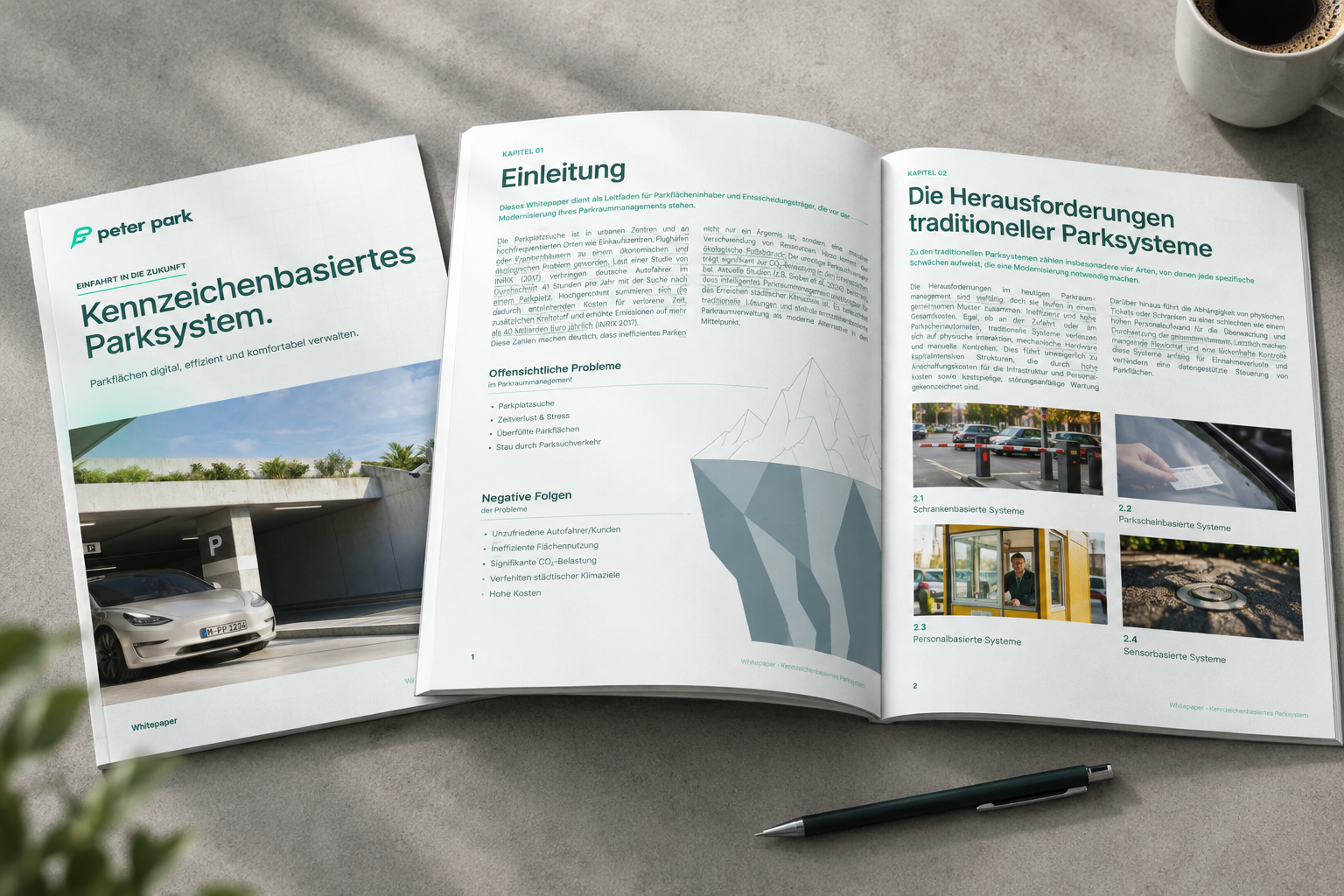
How licence plate-based parking systems work and what operators should consider when switching.
Download whitepaper