The mountain is calling: How digital parking helps mountain railways boost revenue

Mountain railways play a central role in alpine regions. In winter and summer alike, they take countless guests to a wide range of attractions: skiing, snowboarding, hiking, climbing or idyllic mountain restaurants. Yet the valley station often tells the same story: the car park is full by mid-morning, while the ticket office stays quiet. Why? Ski tourers and hikers park at the mountain railway and occupy spaces, but never buy a ticket.
At the same time, shorter winters and rising operating costs call for new sources of income. Find out here how digital, barrier-free parking management distributes spaces fairly, saves guests waiting time and turns the car park into a reliable, year-round source of revenue, without any staff effort.
The situation at the valley station: full car parks, untapped revenue
Shorter winter seasons meet high fixed costs
Shorter winters and unreliable snow conditions mean fewer day and season passes sold at many ski resorts. Meanwhile, the costs of lift maintenance, energy and slope grooming remain high. Because ticket prices cannot be raised at will in a competitive market and many operators are short of staff, the profitability of existing infrastructure comes into focus. Mountain railways need additional revenue that does not depend on the weather and takes pressure off their teams.
Parking without riding
At popular starting points, ski tourers, cross-country skiers, hikers and motorhome travellers often block the spaces right next to the valley station for the whole day. As long as these areas remain free of charge, they park at no cost. The real problem arises at peak times: the blocked spaces are missing for exactly those skiers and families who would buy a lift ticket and stop at a mountain restaurant.
The aim of modern parking management is not to exclude nature lovers, but to establish a fair distribution: those who use the railway park at a discount or for free. Those who only use the car park as infrastructure make a fair contribution to its upkeep and snow clearing.
Why conventional barriers reach their limits in the high mountains
Many mountain railways have so far done without any parking management at all, because manual checks simply cannot be carried out consistently and because conventional barrier systems have considerable drawbacks in an alpine environment:
- Weather sensitivity: snowfall, moisture, ice and frost regularly cause defects in mechanical barriers and ticket dispensers.
- Obstacles to snow clearing: barrier islands make it harder for heavy snow ploughs and clearing vehicles to work quickly.
- Queues: on busy weekends and powder days, barriers cause long lines of cars reaching back onto the access roads.
- Operating effort: wet, unreadable or lost parking tickets tie up valuable staff who are needed at the ticket office or on the lifts.
The solution: barrier-free parking with ski pass integration
A digital system based on automatic licence plate recognition lets you manage the car park without physical barriers. The key to a smooth guest experience is something mountain railway visitors carry anyway: their ski pass.
How the system works in practice
- Free entry: on arrival, a scanner captures the vehicle's licence plate in passing, in compliance with data protection rules. The car drives onto the car park without stopping and without a ticket.
- Payment by parker group:
- Simple parking discount for railway guests: they enter their licence plate and hold their ski pass against the pay station on site (NFC scan). This unlocks a parking discount that the operator can set individually.
- Regular payment for non-riders: people who do not use the mountain railway pay the regular rate before leaving, at the pay station on site or via one of the digital payment options.
- Seamless exit: on departure, a scanner captures the licence plate again and the system checks whether the correct amount has been paid.
The economic benefits for mountain railway operators
Year-round revenue, 365 days a year
Digitalisation turns the valley station into a continuous source of income on fair terms. In summer, operators benefit from hikers, climbers and motorcyclists who used to park for free. Individual time-based rates and defined overnight parking bans also make it possible to regulate and monetise wild campers and motorhomes.
Revenue up by 20 to 30 percent
Compared with pay-and-display machines and manual ticket checks, operators typically increase their parking revenue by 20 to 30 percent. The system records every parking session without gaps, minimises payment defaults and settles outstanding payments automatically via the licence plate.
{{contact}}
Zero staff effort in day-to-day operation
From entry and discounting to following up on unpaid parking sessions, the entire process runs automatically. The railway team no longer needs to check tickets, fix barrier faults or refill pay-and-display machines.
No investment hurdle and flexible rate control
- No purchase costs: the required hardware is provided, so operators carry no investment risk.
- Dashboard control: all rates, free parking periods for short stays and permissions for staff and suppliers can be managed centrally and in real time in the dashboard.
- Dynamic pricing: if needed, parking fees can be linked to occupancy to steer visitor flows on peak days.
Conclusion: the car park pulls its weight
With shorter winters and scarce staff, mountain railways need to make the most of their existing assets. The car park at the valley station is the most effective lever: it secures revenue 365 days a year, protects spaces for actual railway guests and ensures stress-free arrival and departure.
The Söllereckbahn in Oberstdorf shows how smooth implementation works in a demanding alpine setting: the barrier-free system was successfully integrated there to reduce waiting times at peak hours, replace unreliable hardware and eliminate problems with ski pass discounts.
{{contact}}

Marketing Team
We are shaping the mobility revolution. As the voice of Peter Park, we share insights about digital parking space management and smart city solutions — for a world without barriers.
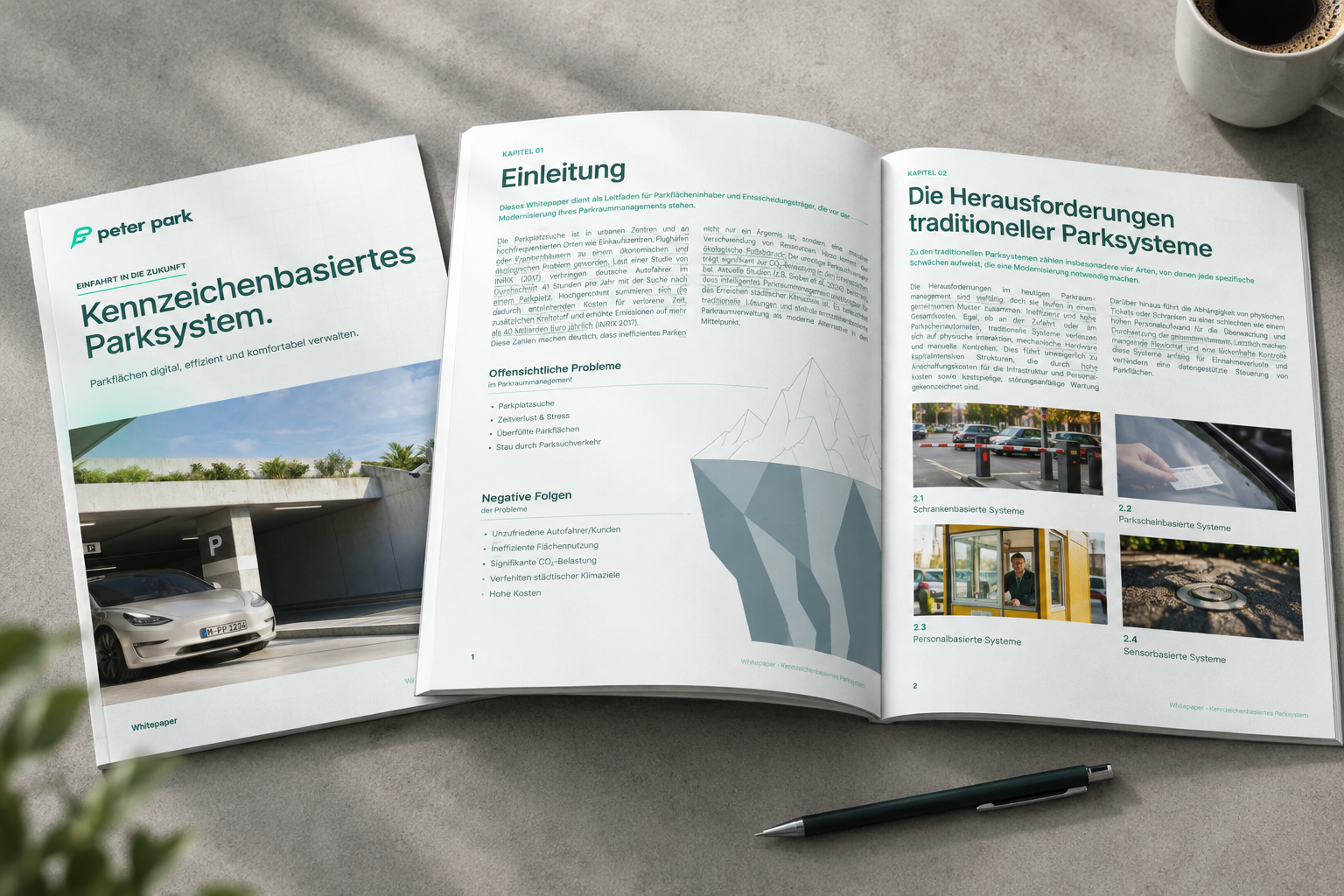
How licence plate-based parking systems work and what operators should consider when switching.
Download whitepaper