Parking by app: How to future-proof your car park with digital payment options

You implement parking by app on your car park by having number plate recognition measure the parking duration automatically while parkers pay by smartphone, card or automatic debit. The solution becomes future-proof when several payment methods run on one common system and thus cover all target groups.
Why should operators rely on digital payment?
Digital payment has long ceased to concern only retail. It is also fundamentally changing parking management. Anyone who parks today expects simple processes and flexible payment options. Parking by app, contactless card payment or automatic billing are therefore increasingly becoming standard in modern car parks.
For operators, this brings tangible benefits. In a classic multi-storey car park or on a large surface car park, a barrier system or staff patrols secure payment. A digital system does without both. The parking session is contactless: nobody has to take a ticket, press a button or insert cash. This ensures a safe and pleasant customer experience without you giving up revenue.
Then there is traffic flow. Barrier-free entry and exit prevent queues at peak times. Parkers simply drive through, and billing runs in the background.
What is the difference between cashless, contactless and mobile payment?
The three terms are often used synonymously. Technically, however, they differ:
- Cashless payment: Umbrella term for all payments without physical cash; Examples in parking: card payment, parking by app, payment via QR code
- Contactless payment: Cashless payment without direct contact between card or smartphone and reader, usually via NFC or optically via QR code; Examples in parking: holding a debit or credit card to the terminal
- Mobile payment: Subtype of contactless payment in which a smartphone or smartwatch serves as a digital wallet; Examples in parking: Apple Pay, Google Pay, Samsung Pay or a browser-based payment page
What technology does parking by app need?
The prerequisite for digital payment in parking is a technology that automates the process and works in compliance with data protection: number plate recognition. Cameras capture the number plate at entry and exit. From the time stamps, the system automatically determines the parking duration.
The number plate thus acts as a digital parking ticket. Barriers, paper tickets and physical parking permits become superfluous. You do not need RFID cards or other means of identification either. For this, Peter Park combines camera-based hardware with its own software to bill precisely and reliably.
Manual enforcement by staff is no longer needed. The system still detects parking offenders automatically around the clock. Your car park only needs a few prerequisites for this:
- a clearly defined entry and exit situation
- a power connection (230 V)
- 4G data reception
Expensive special hardware or prior software knowledge is not required. According to Peter Park, the switch is possible within one day.
What digital payment options are there for car parks?
Different target groups have different expectations. Occasional parkers want to pay quickly, permit holders do not want to have to take care of anything. What matters is therefore not the individual payment method, but the system behind it. Only the right infrastructure enables consistently digital processes from entry to billing.
Contactless at the pay station via NFC
For many parkers, the pay station remains an important point of contact. Modern pay stations such as the touchscreen pay station from Peter Park enable cashless and contactless payment there. More and more operators deliberately do without an additional cash option. This way, they avoid problems with the coin changer, emptying intervals and security risks.
Parkers hold their debit or credit card to the terminal. Alternatively, they use Apple Pay, Google Pay or Samsung Pay via smartphone or smartwatch. Payment takes a few seconds. Especially at peak times, this noticeably shortens the waiting time at the pay station.
Technical requirement: The payment medium and terminal need an NFC chip or NFC antenna. Transmission only works over a short distance, usually up to a maximum of four centimetres.
How secure is NFC? Contactless payments are protected by encryption and tokenisation. A digital placeholder replaces the real card number. Since NFC only works over a very short distance and does not transmit any sensitive personal data, the method is considered just as secure as a classic card payment.
Mobile by smartphone without app download
Browser-based payment via one's own smartphone is particularly convenient. This is parking by app, but without a classic app download. Parkers scan a QR code on site or follow a link and land directly on the payment page. Registration is not necessary. This lowers the entry barrier and works on almost all devices, regardless of the operating system.
The process has four steps: enter the number plate, check the parking duration, select the payment method, pay. In many cases, the parking fee can still be paid up to 24 hours after leaving. This is a customer-friendly safeguard in case someone forgot to pay on site.
{{cta}}
Integration of well-known parking apps
Many parkers already use parking apps from on-street parking. Peter Park can quickly integrate such apps into the complete solution. The software for parking management then links the parking session on your site with payment in the familiar app.
Online shop for permit holders and recurring users
In addition to short-term parkers, employees, residents or regular visitors also need digital options. Via a web-based online shop, they buy and manage time tickets or parking permits entirely online. Access is via link or QR code. After a one-time registration, users manage their number plates, buy tickets and unlock parking discounts.
The advantages for operators:
- no sending of parking permits
- no administrative effort for parking permits
- flexible tariffs, for example employee tariffs, quotas or discounts
Since the number plate serves as a digital parking permit, no physical tickets are needed here either. Especially on larger sites with many recurring user groups, this significantly relieves administration.
Automatic Payment: Parking without an active payment process
The logical next step is fully automatic billing. With Automatic Payment, Peter Park integrates this function directly into the number plate-based parking system. After a one-time registration, the rule is: drive in, park, drive out. The parking fee is automatically debited from the stored payment method.
Only the parking time actually used is paid for. All parking sessions can be viewed in the online account. Such free-flow systems increase convenience and minimise forgotten payments. For operators, the non-payer rate decreases.
Which payment option suits which target group?
Most car parks benefit from a combination. The following overview helps with the selection:
- NFC at the pay station: Suitable target group: Occasional parkers, all age groups; Registration required: No; Benefit for operators: No cash logistics, shorter waiting times
- Browser payment via QR code: Suitable target group: Short-term parkers with a smartphone; Registration required: No; Benefit for operators: Pay station not strictly necessary, subsequent payment up to 24 hours
- Well-known parking app: Suitable target group: Parkers who already use an app; Registration required: In the respective app; Benefit for operators: Familiar process for regular users
- Online shop: Suitable target group: Employees, residents, permit holders; Registration required: Yes, once; Benefit for operators: No permit administration, flexible tariffs
- Automatic Payment: Suitable target group: Regular visitors, commuters; Registration required: Yes, once; Benefit for operators: Fewer non-payers, fully automated
Practical examples: How payment works in everyday life
A typical day on a busy car park shows how the options work together:
- Visitor at peak time: She enters without a ticket, attends her appointment and holds her card to the pay station on her way out. After a few seconds, payment is complete. At the exit there is no barrier and no queue.
- Short-term parker without a trip to the pay station: He scans the QR code on the sign, enters his number plate and pays in the browser. If he forgets, he can pay up to 24 hours after leaving.
- Employees: They book their parking permit in the online shop at the employee tariff. The operator does not have to print or send any permits.
- Regular customer: He has activated Automatic Payment. He drives in, parks and drives out again. The debit is made automatically for the time used.
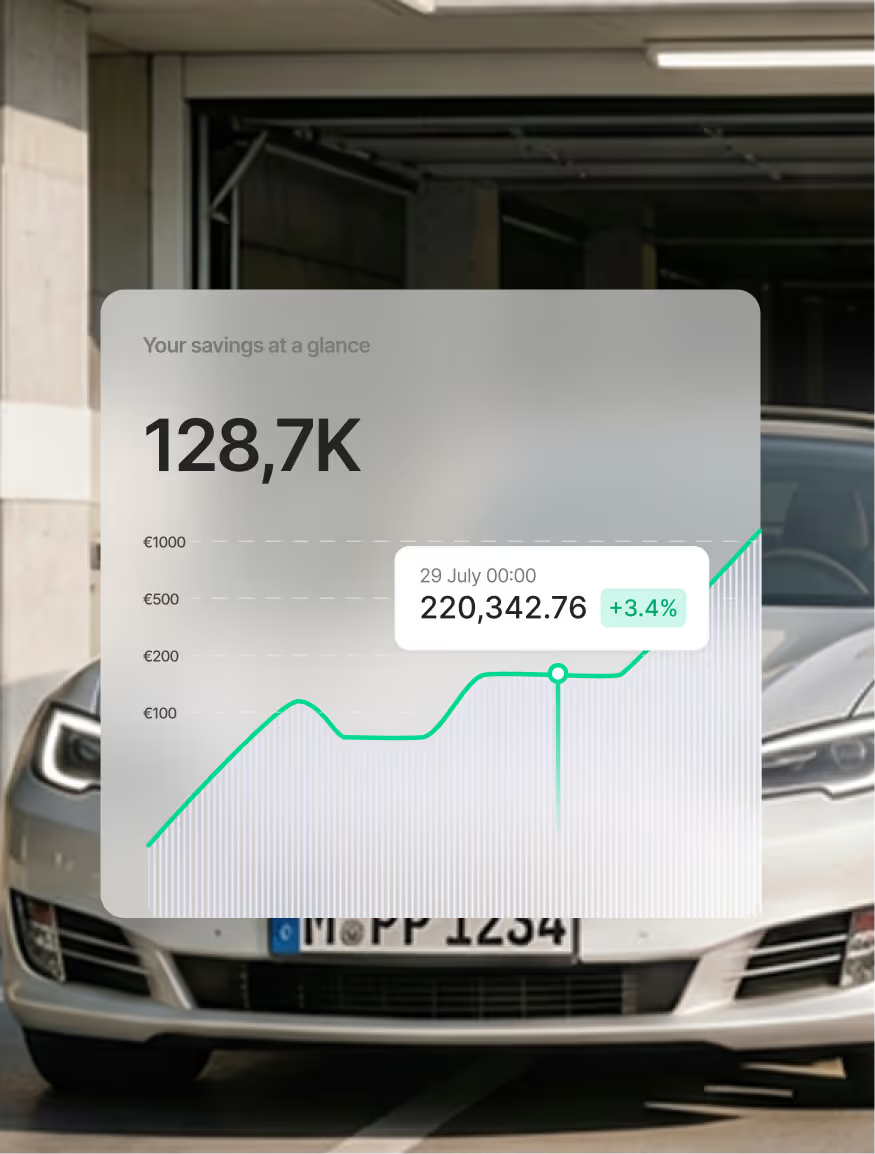
In the dashboard, the operator sees all parking sessions in real time, along with parking duration, analyses and statistics. Peter Park takes care of payment processing.
{{contact}}
Conclusion
Whether NFC at the pay station, parking by app in the browser, online shop or Automatic Payment: modern parking systems offer many ways to pay for parking digitally. What matters is the interplay of number plate recognition, user-friendliness and low administrative effort. Parking management is therefore more than ticket and barrier. It is a data-based system that offers parkers convenience and takes work off your hands as an operator.

Melanie Geipel
This is the Bio Summary
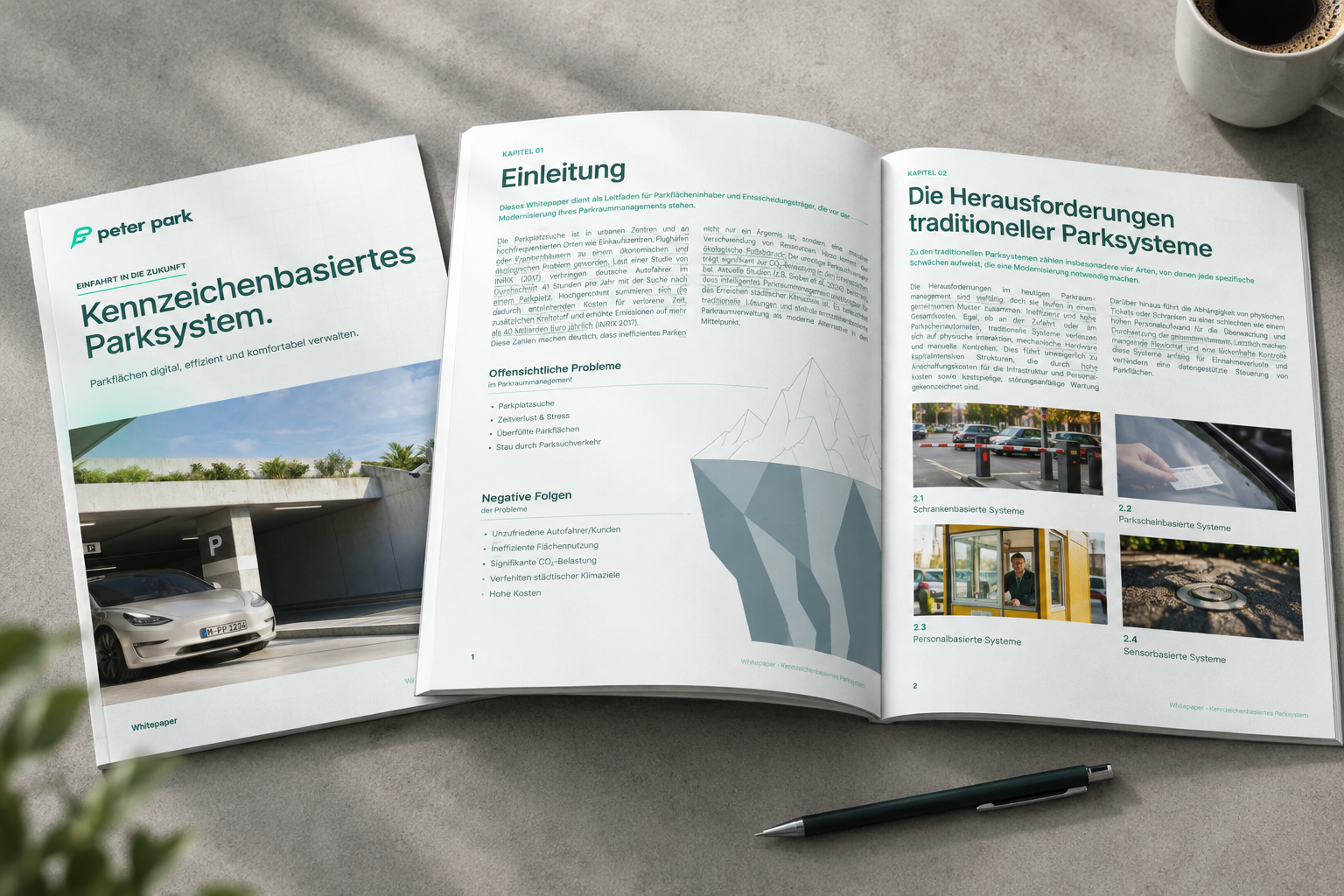
How licence plate-based parking systems work and what operators should consider when switching.
Download whitepaper