Free-Flow Parking: What is it and how does it work?

Free-Flow Parking refers to a parking process in which vehicles enter and exit without stopping at a barrier or ticket machine. Automatic number plate recognition determines the parking duration, and payment is digital or fully automatic.
What is Free-Flow Parking?
The term "free flow" describes the free, continuous flow of traffic on the car park. Instead of a boom barrier, automatic number plate recognition, flexible payment methods and seamless entry and exit keep things moving.
Parkers simply drive in and out. They neither have to wait at a barrier nor take a ticket. The system recognises the number plate and calculates the exact parking duration in the background.
On sites with a barrier system, on the other hand, queues and long waiting times are common. A barrier-free parking system keeps traffic moving, even at peak times.
How does Free-Flow Parking work?
There are two variants of Free-Flow Parking: the fully automatic and the semi-automatic process. In both cases, barrier and paper ticket are eliminated. The difference lies in the payment.
Fully automatic Free-Flow Parking
The fully automatic variant combines a barrier-free parking system with an automatic payment function such as Automatic Payment from Peter Park. Parkers do not have to take care of anything, the entire parking session runs in the background. Payment can practically not be forgotten, and only the parking time actually used is charged.
The prerequisite is a one-time registration in which the number plate and payment method are stored. After that, all that remains is: drive in, park, drive out.
- Enter without a barrier: Number plate scanners capture every vehicle and start the parking session automatically. Current and past parking sessions including receipts can be viewed in the online account at any time.
- Simply park: Parkers leave their vehicle in a free space and enjoy their stay without having to worry about the parking session.
- Exit without manual payment: The system recognises the vehicle, calculates the exact parking duration and charges the amount via the stored payment method. Parkers then receive a notification about the completed parking session.
Semi-automatic Free-Flow Parking
Here, too, vehicles enter and exit without a barrier and without a paper ticket. Scanners capture the number plate on entry and again on exit. The system calculates the parking duration and checks whether the parking fee has been paid.
The difference: parkers pay themselves, at the pay station on site or via their own smartphone. Online payment is often still possible up to 24 hours after leaving. This keeps parking flexible and convenient, even without automatic billing.
Both variants compared
- Entry and exit: Fully automatic: Barrier-free via number plate recognition; Semi-automatic: Barrier-free via number plate recognition
- Requirement for parkers: Fully automatic: One-time registration with number plate and payment method; Semi-automatic: None
- Payment: Fully automatic: Automatically via stored payment method; Semi-automatic: Pay station, smartphone or online after leaving
- Risk of forgotten payment: Fully automatic: Practically ruled out; Semi-automatic: Possible, subsequent payment online
- Time charged: Fully automatic: Actual parking duration; Semi-automatic: Actual parking duration
- Suitable for: Fully automatic: Regular customers, frequent parkers, employees; Semi-automatic: Occasional parkers, tourists, visitors
Both variants can be combined on the same site, as the Traunstein case study below shows. This way, you reach registered regular customers and spontaneous visitors alike.
{{cta}}
What are the advantages of Free-Flow Parking over barriers?
A free-flow system offers advantages to parkers and car park owners alike. In addition, there are positive effects for the environment.
Advantages for parkers
Parkers no longer have to wait at barriers or take a ticket. Various digital payment options provide flexibility. In the fully automatic variant, only the actual parking time is charged. This makes parking fairer, saves time and significantly increases convenience.
Advantages for operators
Car park owners save costs, because high initial investments as well as maintenance and repair effort for barrier systems are eliminated. Automated processes noticeably reduce administrative effort.
In addition, anonymised parking data can be collected and evaluated. These analyses show how your site is used and help you optimise processes in a targeted way.
Advantages for the environment
Since paper tickets are no longer needed, paper consumption decreases. Because vehicles do not stop at entry and exit, no queues form. This helps reduce CO₂ emissions and noise pollution.
What does Free-Flow Parking have to do with Parking 4.0?
Free-Flow Parking is more than convenient entry and exit. It is the technical foundation for what is discussed under the term Parking 4.0.
What does Parking 4.0 mean?
Similar to Industry 4.0, it is about the intelligent networking of different components using information and communication technologies. New technologies make processes more efficient and therefore also more sustainable.
For parking, this means: the parking process becomes more convenient for parkers and parking management becomes easier for operators. Parking 4.0 no longer regards parking space as a mere storage area. It links urban mobility, e-mobility and traffic management.
Parking 4.0 addresses typical problems in parking management:
- lack of parking space
- difficult switch from the car to other forms of mobility
- parking technology prone to faults
- time-consuming parking management
Connected parking as the basis
Number plate recognition makes barrier-free parking possible without a parking disc or parking ticket. Because all processes on the site run digitally, EV charging and interfaces to other mobility services can be integrated. A barrier system cannot provide this connectivity.
From car park to mobility hub
Parking 4.0 leads away from the classic car park towards the mobility hub. Nodes for parking, sharing models and connections to public transport emerge on the site. In addition to spaces for cars, micro-mobility fleets find room there. Charging infrastructure for electric cars becomes an integral part. In this way, car parks contribute to more sustainable mobility.
Flexible use: from employee parking to overnight parking
Many car parks, especially in retail, are hardly used outside peak times. Car parks of offices or supermarkets are often empty after closing time. These times can be used for residential parking, for example. This relieves street space and reduces traffic searching for parking. With Free-Flow Parking and digital tariffs, such multiple use can be implemented without additional staff.
How did the town of Traunstein introduce Free-Flow Parking?
An example from Upper Bavaria shows how Free-Flow Parking improves the parking experience and prevents queues in the town centre. The town of Traunstein switched to this solution in 2022. Together with Peter Park, it developed a fully automatic concept. The four-storey underground car park of the town hall, which comprised 200 spaces at the time of the switch, was converted to a barrier-free system with automatic payment.
Implementation on site
Peter Park installed two scanners for number plate recognition. They record the exact parking duration and enable automatic payment. In addition, two pay stations are available for payment on site. A double-sided LED display outside shows the free spaces in real time. Via a dashboard, those responsible see all data and manage permit holders, also directly by tablet in the town hall.
Results for the town
With the switch, waiting times and congestion at the entry and exit disappeared. The town saved costs because maintenance-intensive barrier systems were no longer needed. Automated processes relieved the administrative staff. Doing without tickets avoided paper waste, and the flowing traffic reduced CO₂ emissions.
Christian Hümmer, Lord Mayor of Traunstein at the time of the switch, drew a positive conclusion: "Thanks to digital parking, we are taking a big step closer to digitalising our administration. Municipal parking management can play a central role in optimally managing traffic and making towns more attractive. Barrier-free parking not only offers our citizens a new, improved parking experience, but also puts efficiency and quality of life at the centre."
{{contact}}
Conclusion
Free-Flow Parking replaces barrier and paper ticket with automatic number plate recognition and digital payment. Parkers enter and exit without waiting and only pay for the actual parking time. Operators reduce investment, maintenance and administrative costs and gain valuable data. As the basis of Parking 4.0, Free-Flow Parking also prepares your car park for EV charging, sharing and the path to a mobility hub.

Melanie Geipel
This is the Bio Summary
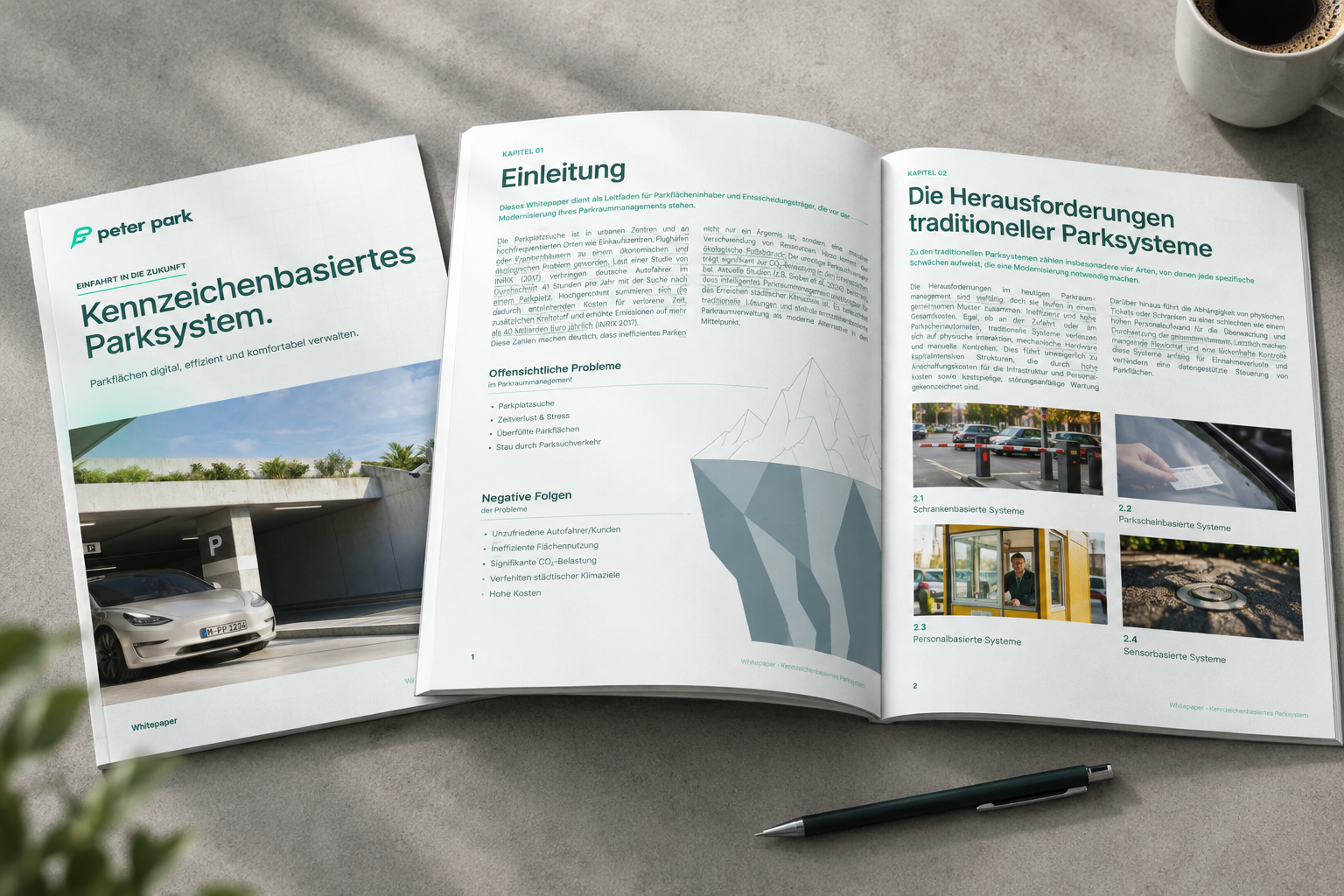
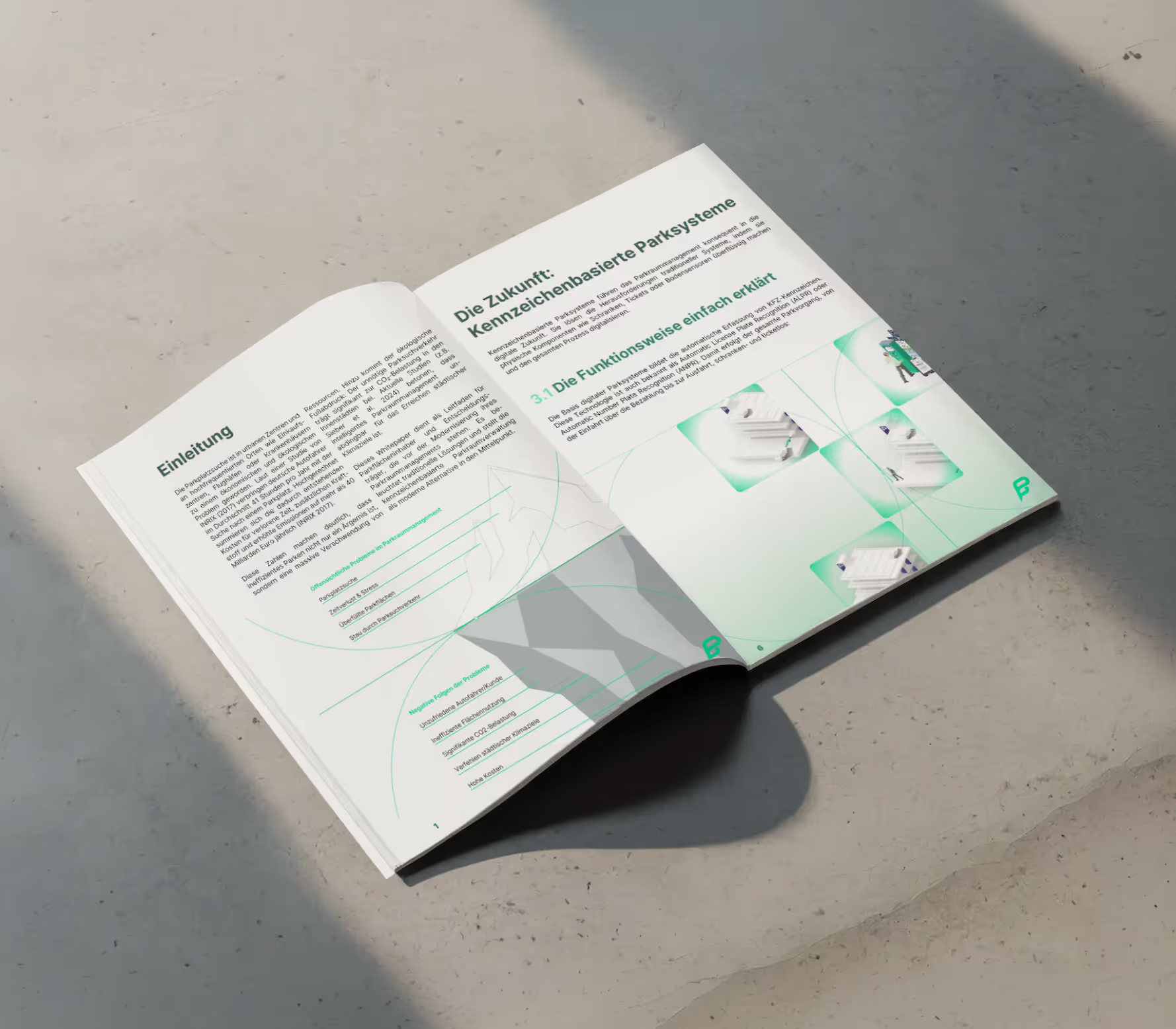
How licence plate-based parking systems work and what operators should consider when switching.
Download whitepaper