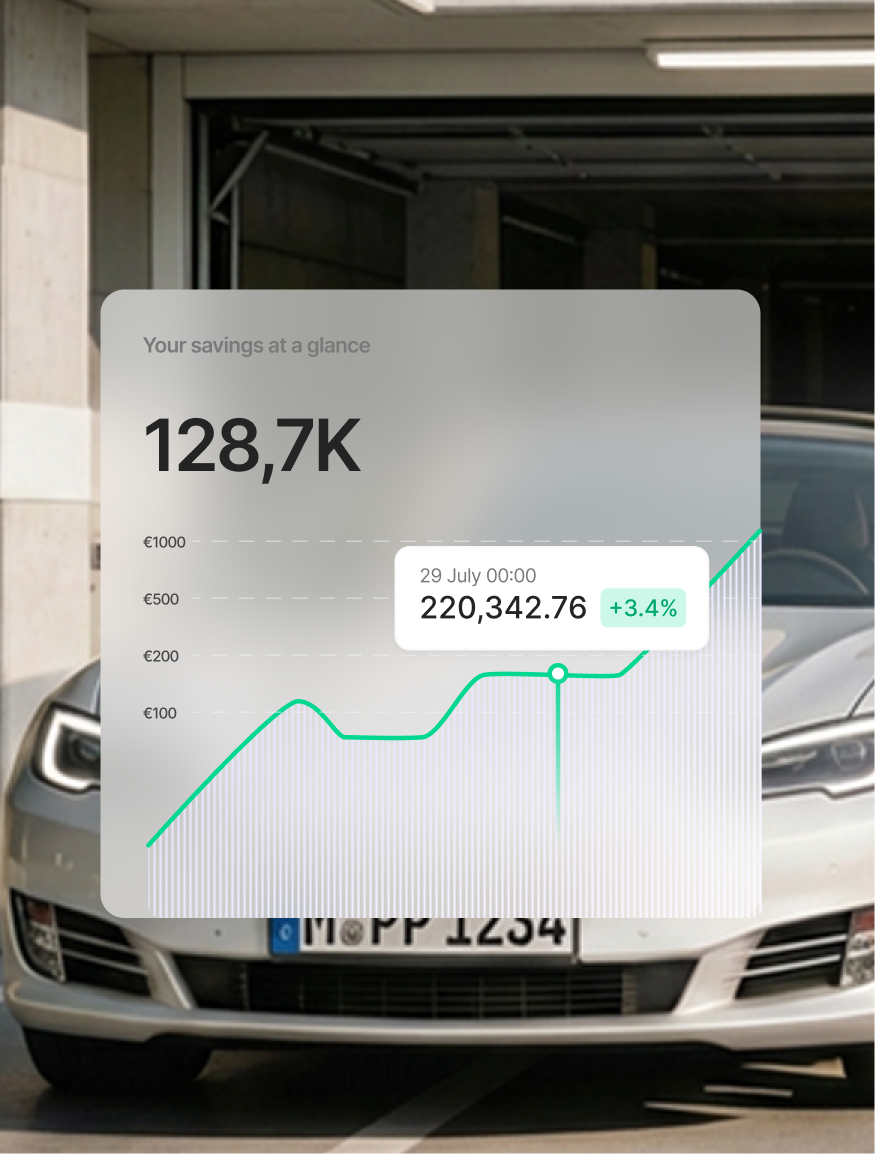
From parking lot to mobility hub

Congested inner cities — when it comes to sustainable mobility, change is needed. What infrastructure do we need?
Smart mobility requires infrastructure
The mobility revolution is in full swing: e-vehicles and car sharing are changing the image of inner-city traffic. These concepts place new demands on infrastructure due to the increasing demand for e-charging stations and parking spaces. Space is already running out. Cars parked on the side of the road affect pedestrians and cyclists; a lack of parking space leads to parking traffic, which pollutes the air and environment.
In order to be able to make a sustainable mobility turnaround possible, the various mobility offers must be linked to relieve traffic and enable the switch to more sustainable forms of mobility.
This requires hubs that bring together the mobility mix, consisting of micro mobility, car sharing, e-charging stations, parking and other offers: The Mobility Hubs.
But where can these mobility hubs be created and what can their use look like?
From parking lot to mobility hub
Holistic mobility hubs form hubs for parking facilities, sharing models and public transport. As a result, a flexible combination of different uses is possible. This creates the basis for more micro mobility fleets and an improved e-car charging infrastructure.
The already scarce space in inner cities rarely allows the creation of new spaces that can represent such mobility hubs. But that is not necessary at all, because by efficiently using existing space, these mobility hubs can be created without major infrastructure projects.
With smart parking space management, a mobility hub can be created from any parking space, tailored to the needs of the surrounding area.
The key here will lie in the digitization of parking administration: For example, empty supermarket- and office parking spaces - previously blocked by barriers - are provided outside business hours and will be used in the future to link various mobility offers in and outside the city.
{{contact}}
Smart parking space management
The question of transportation is no longer just: “Car or train?” Forms of mobility are becoming more flexible: The Mobility Hub is reached by car, the journey continues by S-Bahn and the last stretch is covered with an e-scooter or on foot. This requires linking the booking and payment processes of various providers. This includes parking, public transport and scooters, for example.
This can be made possible by smart, barrier-free parking with Number plate recognition. How is that going? An example: With license plate recognition, vehicles are recorded as they enter and exit and their parking process is automatically compared and billed with the stored public transport ticket. Commuters can easily plan. Urban traffic is relieved.
This also allows sharing models to be integrated. Where car sharing fleets have so far had to stop before closed barriers, barrier-free allows Parking space technologythat more parking spaces can be used for car sharing services.
Background info: Digital and barrier-free parking space technology
To enable mobility hubs, a system is needed which can be used to link the various mobility offerings in order to make the user experience uncomplicated. This is made possible by systems based on license plate control without parking barriers. The smart parking systems, which combine minimal hardware and cloud-based software, digitally represent the entire parking process and enable 24/7 control of the parking space. Traditional barriers, sensors, control personnel and paper tickets are no longer necessary.
When entering and leaving, license plates are recorded in accordance with the GDPR. A is running in the background softwares, which links parking processes and payment.
This eliminates immense costs for parking lot operators in the purchase and maintenance of their parking space technology, because digital parking systems are cheaper and less subject to maintenance, as only the license plate scanner has to be installed analogously. This is robust and is installed several meters above the road, which also protects it from vandalism. A 24/7 maintenance service, as required for restricted parking spaces, is no longer necessary.
Unlike conventional parking sensors, license plate recognition-based parking technology allows maximum parking duration monitoring and directly identifies parking violations, so that no need to cover the area.
Parking spaces can no longer be viewed in isolation, but must be integrated as part of digital mobility concepts.
The integration of partners around to pay parking costs via app, Using car sharing models or even renting an e-scooter to continue your journey in the inner city area is becoming more and more established as a standard. These requirements must Parking space technology This is the only way to create mobility hubs without creating a major financial burden for the federal and state governments.
Because sustainable mobility cannot simply be prescribed — it must be convincing through customer-friendly offerings and smart use of available resources!
{{contact}}
The Munich-based start-up Peter Park System GmbH has taken on the mobility revolution and is making it possible to digitize parking spaces. With intelligent parking space management software and automatic number plate recognition for cities and private parking operators, parking processes are paper-free and barrier-free. The barrier-free flow reduces peak traffic at P+R parking facilities when entering and leaving. The newly acquired traffic and occupancy data provide the necessary insights to tailor mobility and service offerings to meet requirements.

Marketing Team
Wir entwickeln die optimale Lösung für Ihr digitales Parkraummanagement: nahtlos integriert, KI-gestützt und mit allen Funktionen, die Sie benötigen.