Peak times in retail: How smart parking solutions relieve shopping centres and supermarkets
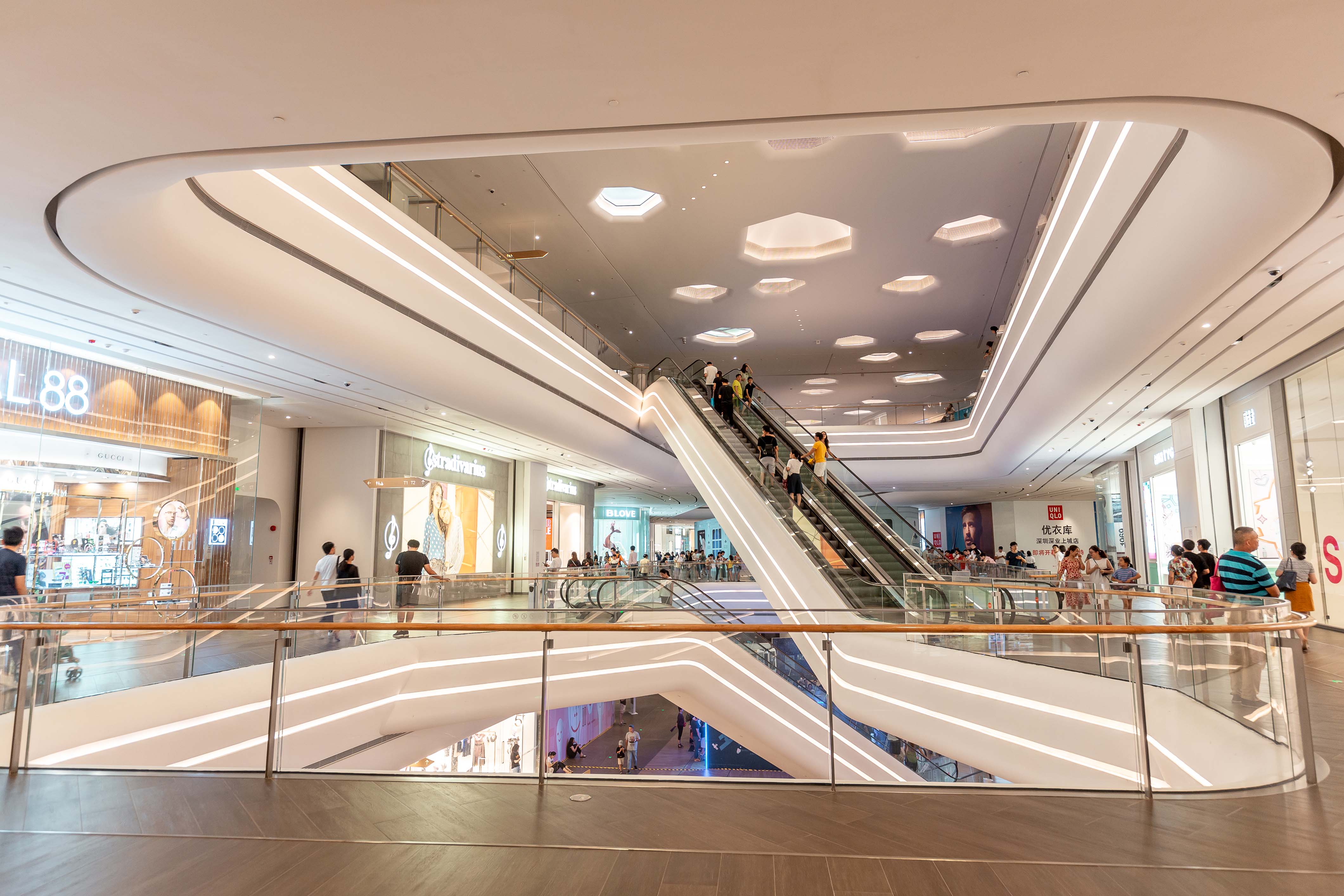
Shopping centres and supermarkets handle peak times in the car park best with a digital, barrier-free parking system. It lets customers enter and exit without stopping and ensures that long-term and unauthorised parkers do not block spaces.
When do peak times occur in retail?
Customers who want advice or want to try on clothes go to the shopping centre or the town centre. In doing so, they support local retail and take their purchases home straight away. Many do this in one go, and on the same days.
Typical peak times are:
- Saturdays and weekends: the most popular time for shopping, in shopping centres as well as in town centres.
- Evenings and Advent weekends: In the run-up to Christmas, there is a shortage of parking spaces in many town centres and shopping centres.
- End-of-season sales and promotional days: Seasonal discounts or shopping events such as Black Friday attract bargain hunters.
- Days before public holidays: Supermarkets are then almost in a state of emergency, even if the shops often only close for one or two days.
Why do customers buy particularly much before public holidays?
Several reasons come together. On public holidays, many shops in Germany are closed, so customers stock up. For festive dishes, they need ingredients they do not otherwise have at home. Full shops give the impression of possible shortages and tempt people into panic buying. Special offers before public holidays attract additional customers. For many, the big shop is also a ritual to get into the festive mood.
Most people do this big shop by car. The shopping experience therefore does not begin in the shop, but when entering the car park.
What problems do retail car parks have at peak times?
When many customers arrive at the same time, they often have to queue several times: at the entry barrier, at the checkout and finally, fully laden, at the parking pay station. The already stressed customers then meet employees who are working at their limit because of the rush.
There are further burdens:
- Queues and breakdowns at barriers: Stopping and taking a ticket hold up traffic. When it is busy, barrier systems fail more often. Faulty car park barriers prolong waiting times and tie up staff for repairs.
- Staff shortages: Especially in the run-up to Christmas, retail lacks staff. Complaints about the car park quickly overwhelm employees.
- Unauthorised and long-term parkers: They use free car parks without shopping. Customers cannot find a space, and following them up takes a lot of time.
- Customer loss: If customers cannot find a free space or traffic is at a standstill on the site, they drive away and may shop at the competition.
The following comparison shows how a barrier system, a parking disc without digital enforcement and a digital, barrier-free system deal with these problems:
- Queues at entry and exit: With the barrier system, frequent due to stopping and tickets. With a parking disc, no queues. Digital and barrier-free, no queues and no stopping.
- Breakdowns and maintenance: The barrier system has wearing parts and needs an on-call service. The parking disc needs no technology. Digital and barrier-free, there is hardly any hardware and no wearing parts.
- Unauthorised and long-term parkers: The barrier system controls them via payment. With the parking disc, enforcement is only patchy. Digital and barrier-free, they are recorded almost without gaps.
- Staff effort: With the barrier system, high in the event of faults; with the parking disc, high due to manual enforcement. Digital and barrier-free, low, as the provider takes over the follow-up of violations on request.
- Occupancy data: With the barrier system, limited; with the parking disc, none. Digital and barrier-free, in real time in the dashboard.
{{cta}}
How do retailers prepare for peak times?
The rush before public holidays repeats itself every year. Retailers therefore know proven strategies:
- They forecast demand and order popular goods earlier, such as meat, baking ingredients, confectionery, sparkling wine and wine.
- Where possible, they extend opening hours and deploy additional staff and seasonal temps, especially at the checkouts.
- They advertise special offers more heavily via newsletters, social media, coupons or competitions.
- They offer delivery or "click and collect".
- They steer the flow of customers through adapted aisles, shelves and timely notices about scarce products.
One place is often overlooked: the car park. Every visit begins and ends there. Retailers can also make sure here that customers enjoy their shopping despite the rush.
How does a barrier-free parking system work in retail?
The digital parking system from Peter Park works with data protection-compliant number plate recognition at entry and exit. It automatically calculates the parking duration from the arrival and departure time. Barriers, tickets and parking discs are eliminated.
Managed sites: Before leaving, customers pay at touchscreen pay stations using their vehicle number plate. Depending on the pay station, only cashless payment or cash payment in addition is possible. A receipt is available on request. Alternatively, customers pay via parking apps such as EasyPark or Parkster or online. Then there is no need to go to the pay station. After payment, parkers have around 15 minutes to leave, depending on the size of the site.
Free or maximum parking duration: Shopping centres and supermarkets that have not previously monitored or managed their site can introduce a free maximum parking duration. Nothing changes for customers as long as they comply with it. This keeps long-term parkers away without additional staff. Anyone who exceeds the time receives a payment request for an increased parking fee set by the operator.
Administration: In the online dashboard, operators see occupancy at specific times. There they also authorise number plates that are allowed to park longer, for example those of employees or tradespeople. Customer service and the follow-up of parking violations are taken over by the provider on request.
What are the advantages for shopping centres and supermarkets?
Lower operating costs
Digital systems need little hardware on the site and are relatively inexpensive to purchase. Without components prone to wear, repair, upkeep and maintenance costs fall. An on-call service as with barrier systems is not necessary. Automated processes save work and avoid errors. Without parking tickets, paper and plastic waste are also eliminated.
No queues at entry and exit
Especially on Saturdays or on Black Friday, every minute counts. Customers and employees enter and exit without stopping. This speeds up the parking process and reduces CO2 emissions on the site. With app or online payment, the waiting time at the pay station is also eliminated.
Free spaces for customers instead of unauthorised parkers
Anyone who parks without paying or beyond the permitted duration is recorded almost without gaps. This makes the car park unattractive for unauthorised parkers. The spaces remain free for revenue-generating customers, even in the busy period before public holidays.
Flexible prices through real-time data
The system provides real-time usage data without additional sensors. Based on this, prices can be designed according to occupancy. Current occupancy can be shown on websites and displays at the car park.
Relieved employees and more satisfied customers
Fewer parking problems mean fewer complaints. Employees concentrate on advice and sales instead of parking questions. Customers who can shop in a relaxed way even at peak times are happy to come back.
Lively town centres
A smooth parking experience attracts visitors to the town centre. Retail and municipalities benefit equally: the car parks operate more economically, and parking pressure in the town centre decreases.
Practical examples: Haerder Center, Edeka and das einstein
Haerder Center, Lübeck: The shopping centre in Lübeck's old town offers shopping and services on 10,000 square metres. The complex includes an underground car park with 250 spaces, operated by KWL GmbH, a subsidiary of the Hanseatic City of Lübeck. In autumn 2022, the Haerder Center replaced its barriers with the Peter Park solution and opened Lübeck's first barrier-free multi-storey car park. The system is more cost-efficient and less prone to faults. Parkers enter and exit without stopping even at peak times and pay in cash, by card or via app. Dr. Ralph Bruns, Head of Parking at KWL GmbH: "With the new barrier-free car park, the city of Lübeck benefits from a parking system that not only makes parking in the city centre easier, but also prevents congestion and reduces CO2 emissions."
Edeka, Messe-Allee Leipzig: Until July 2021, parkers left their cars overnight or permanently in the customer car park. The store was looking for a customer-friendly solution without additional effort for employees. With the switch, the Peter Park System recorded the number plates at entry and exit and deleted them if the free maximum parking duration was observed. If it was exceeded, a contractual penalty became due. Long-term and overnight parking was no longer worthwhile, and the spaces were available to customers again, especially before public holidays. As a result, further Edeka stores in Leipzig and Taucha introduced the system.
das einstein, Munich: The shopping centre "das einstein" also relies on digital, barrier-free parking management from Peter Park.
{{contact}}
Conclusion
For customers, peak times at weekends, during end-of-season sales or before public holidays begin in the car park. A digital, barrier-free parking system avoids queues there, keeps unauthorised parkers away and relieves staff. Shopping centres and supermarkets thus reduce their operating costs and secure revenue, because customers find a space even when demand is high. The Haerder Center and the Edeka stores in Leipzig show that this works in everyday practice.

Regina Groß
PR manager with a passion for IT and digitization who loves to translate complex issues into understandable stories.
How licence plate-based parking systems work and what operators should consider when switching.
Download whitepaper